Showing posts with label NYD. Show all posts

Wednesday, 1 January 2014

New Year’s Day, 2014: Shepherd’s Warning

Red sky at night, shepherd’s delight,
Red sky in the morning, shepherd’s warning

This was not my most enjoyable new year’s day (NYD) bird watch. December 2013 had been wet and windy, with parts of southern Britain recording nearly twice the average rainfall and one of the stormiest months on record. Early in the month strong winds and high tides resulted in a storm surge causing extensive damage along the east coast. Further storms hit in the run up to Christmas and again between Christmas and new year leading to widespread flooding in many parts of the country with the south and south-west being particularly badly affected. Fortunately, Bedfordshire escaped the worst of the weather, although rivers were running high, the ground was saturated and there was a lot of standing water in the fields. More than anything else the inclement weather probably accounted for the all time low score of only 102 species in the Bedfordshire Bird Club’s Christmas Bird Hunt. The weather forecast for NYD was for more of the same. This did not bode well.

Each NYD I try to record as many species as possible. I limit myself to an area within 10km of home, currently the east Bedfordshire village of Henlow, to both reduce travelling time and maximise birding time. This area stretches from the chalk downland of the Chilterns, rising to 183 m at Telegraph Hill, in the south across the flood plain of the River Ivel and its tributary the Hiz to the greensand ridge in the north. The A6 trunk road between Luton and Bedford forms the western boundary while the eastern border is a line on the map passing through the village of Ashwell. Three Hertfordhsire towns, Baldock, Letchworth and Hitchin, occupy the south-eastern quadrant while the smaller towns of Stotfold and Biggleswade lie on the route of the A1 which runs north-south across the area. The larger towns of Luton and Bedford lie outside this area, to the SW and NW respectively.
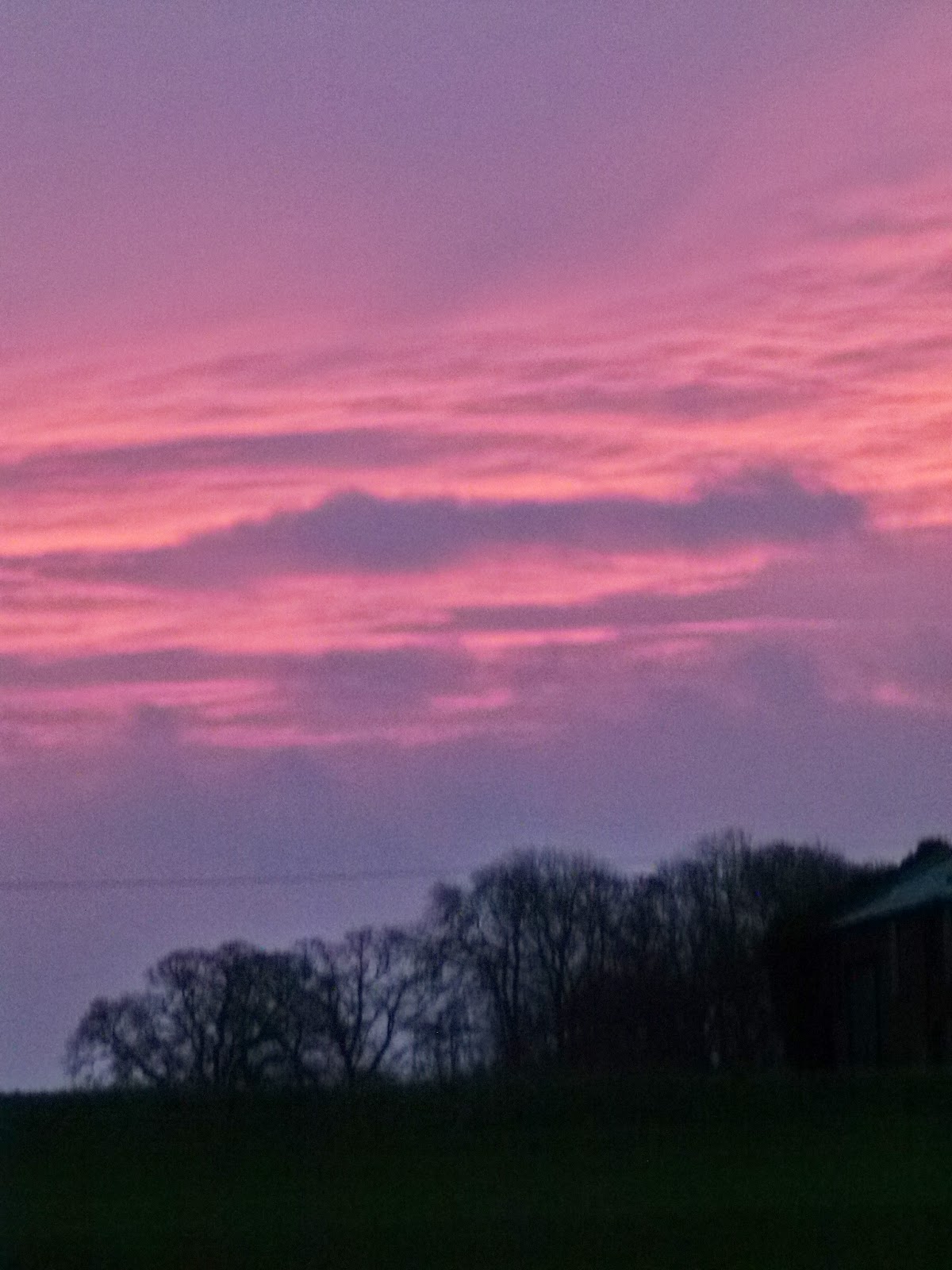
New Year's Day Sunrise, Poppy Hill
It was still dark when I first ventured out at 05:45 on 1 January 2014, but mild with a cool southerly breeze. Stars twinkled between the clouds as a Robin singing under the village street lights became the first bird of the new year, as has been the case for each of the last three years. Away from the lights it was still too dark for much to be moving. A harsh croak revealed the presence of a Heron and a little later a Carrion Crow cawed. No owls were heard nor seen and nothing further was recorded until I approached Henlow Bridge fishing lakes when Moorhen, Coot and Mallard were heard calling. Arlesey railway station was brightly lit prompting Blackbird to sing as well as another Robin. Wood Pigeons crashed from lakeside trees while in the poplar plantation north of the River Hiz, Jackdaws and Carrion Crows were beginning to stir from their roost. Despite the proximity of the Poppy Hill rookery, no Rooks were heard. Canada Geese, heard honking were my tenth species of the day (at 06:39) and then, at last, a Tawny Owl hooted from the woods behind the Grange, the only owl I recorded all day. By 07:04 the sky was beginning to lighten in the east, the rising sun tinging the clouds with red. Red sky in the morning, shepherd’s warning.

More birds were becoming active, but despite the lightening sky, most were still being heard rather than seen. The flight calls of Redwing and Skylark were joined by the chuntering of Grey Partridges from the fields, raucous calls of Rooks from the rookery woods and the mewing calls of two Buzzards from the riverside trees.  The whistled call of a Kingfisher came from beside the River Ivel, which after the recent storms and heavy rains, was running fast and deep and the churring call of Wren was heard nearby. The slowly improving light was accompanied by a brief shower of rain and two Blackbirds in silhouette were the first birds seen on NYD. The conifer plantation on the banks of the Ivel can be good for flocks of the smaller species but this early on NYD only a singing Goldcrest was found and I could not rustle up a Coal Tit. A pair of Stock Doves flying out of the woods were my 20th species (at 07:50), followed shortly after by the yaffle of a Green Woodpecker and flyover Meadow Pipits and Siskins. A winter feature of my regular walks round my patch is the flight of Black-headed Gulls following the R.Ivel south; on NYD they were first noted at 08:00, accompanied by a lone Cormorant. In fields east of the Poppy Hill fishing lakes stood a gaggle of six Greylag Geese. The number of waterfowl on the lakes has been slowly dwindling since the highs of autumn (80+ Tufted Duck with a supporting cast of Garganey, Scaup and other water birds). On NYD the Tufted Duck flock remained (18 males and 14 females) accompanied by 1 female Gadwall, three Coots, two drake Mallards and a family Mute Swans. While counting the ducks, a Mistle Thrush sang from the trees beside the lake, both Great Tit and Chaffinch were also heard and several Common Gulls (30th species at 08:25) flew south among the Black-headed Gull flocks.

The wind was picking up from the south and cloud cover increasing as I headed across the open fields where a flock of Magpies gathered in a remnant hedgerow and a Grey Partridge flushed, flying low over the fields on whirring wings. Smaller species, though, were proving harder to find in the deteriorating weather. Over the autumn, the market garden strips have hosted numerous birds feeding on the weedy edges including flocks of Linnet, Skylark and Meadow Pipit. On NYD, a Pied Wagtail flew over and a couple of Dunnock chased along the edge but I could only find a single Linnet although a Corn Bunting gave itself away by singing. The horse paddocks beside the railway attracted a mixed flock of c.300 Starlings, c.30 Fieldfare and a few Redwings while a Sparrowhawk circled over the woods in the Ivel Valley, but it was not until I arrived at the north end of the Poppy Hill sewage treatment works, protected from the southerly wind by the surrounding woods, that I started to pick up some of the smaller species. A charm of Goldfinches fed on some thistle heads, a couple of Song Thrushes flew from the field edge into the woods and a startled Rabbit, my first mammal of the day bolted for cover. In the lee of the woods a mixed tit-flock worked its way along a hedgerow and included Blue Tit, Long-tailed Tit, Goldcrest and at least one Chiffchaff while a male Bullfinch called from some scrub inside the works compound. A Pheasant called from the woods and as the rain began to fall (maybe I should have listened to that shepherd) a Great Spotted Woodpecker popped into a hole in the trunk of an oak. The sewage settling tanks and surrounding lawns were attracting a good numbers of birds including at least 50 Pied Wagtails, c.20 Meadow Pipits, several Reed Buntings (50th species at 10:01) and one Grey Wagtail. And then it began to rain in earnest. Heading home along the banks of the R.Ivel, I flushed a Woodcock for my last species of the morning. I had scored well on my local patch but had missed some, most notably Coal Tit and Yellow Hammer.

By 10:35 I was back home, warming up, drying out and tucking into a bacon and egg roll (thank you Mrs Hicks!). Collared Dove, Greenfinch and House Sparrow (55th species at 11:10) were seen in the garden.

Flooded meadows, Langford Mill
If anything it was raining even heavier when I headed out (that shepherd knew what he was talking about). First stop was Stockbridge Farm, where a Little Egret was feeding in the muddy pool in the very muddy field. In the driving rain I forgot to check the rooves of the barns and so missed Feral Pigeon and did not note another all day. From there it was onto Langford Mill. The meadows immediately west of the mill were flooded and looked very promising. I quickly found Lapwing and Snipe among numerous ducks and geese and at one time had four species of thrush, Blackbird, Song Thrush, Redwing and Fieldfare in the same field of view, feeding at the base of a hedge. A walk through the flooded common produced more Snipe and a single Jack Snipe (it wasn't there when I had tried the same trick for the Christmas Bird Hunt). Returning to the car, I decided to have another look at the flooded meadows and there was a Water Rail (60th species at 12:09) feeding in the open, a nice bonus.

Next stop was Broom Gravel Pits. The Gypsy Lane East complex was mostly flooded and will become one lake should the rain continue. It was disappointingly almost devoid of birds with the only waterbirds being a few Mute Swans, Coot and a male Shoveler, but no gulls or waders. There were more birds on the deeper Gypsy Lane West lake including my first Pochard and Great Crested Grebes of the day. A very wet circumnavigation of Peacock’s lake added Wigeon, Little Grebe and eventually a pair of Teal but again no gulls or waders. A screeching Jay was found in the Moat House woods and a small flock of Lesser Redpolls in the silver birches alongside Gypsy Lane rounded off my visit to Broom.

Nothing new was found at Swiss Gardens where they are dredging the lake, although a strange crow-like call attracted my attention. It turned out to be a Harris Hawk, perched in a lakeside tree and, presumably an escapee from the nearby Bird of Prey Centre. The dredgings from the lake are being spread over fields behind the cricket ground and in the wet conditions have the appearance of estuarine mud flats, although only attracting a flock of c.30 Lapwing on NYD. A potter along Old Rowney Lane was not productive, although my only Kestrel of the day was seen back near Old Warden. By now the light was beginning to fail, so a quick stop at Warden Warren got me the hoped for Coal Tit (70th species at 15:50) but neither Treecreeper nor Nuthatch. I did hear a call that was tantalisingly crossbill-like, but I only heard it the once and could not locate any birds.

I finished the day at Broom Quarry South where a covey of partridges included two Greys and six Red-legs (71st species at 16:04) but again there were no gulls, nor any Golden Plover. By the time I got home it was dark and raining even more heavily.

My New Year’s Day total was 71 species (five lower than last year), 52 of which had been recorded on my home patch. All were species that I have previously recorded on NYD birdwatches. I had visited 10 sites but driven only 24 miles. There were nine species that I had hoped to find but which had eluded me: Red Kite, Golden Plover, Green Sandpiper, Lesser Black-backed Gull, Herring Gull, Little Owl, Nuthatch, Treecreeper and Yellow Hammer. It is the first time I have not recorded Yellow Hammer on NYD since moving to Henlow.  


Despite the weather and the shepherd’s warning, it had been a good day in the field.  

Originally published in The Hobby 132:7-9


Tuesday, 2 January 2007

New Year’s Day, 2007

For the past few years I have spent each New Year’s Day (NYD) trying to see as many species as possible within 10 km of home. This year (2007), as usual, I was up and about well before dawn but before the birding could start I had to retrieve Andrew (number one son) from a party in Hitchin so that he would be in a fit state to go to work later in the day. A Robin singing under the village street lights welcomed in the New Year but no other birds were seen on the 25 km round trip.

Home for the last five years has been the Bedfordshire village of Henlow. My ‘home range’ stretches from the chalk downland of the Chilterns, rising to 183 m at Telegraph Hill in the south across the flood plain of the River Ivel and its tributary the Hiz to the greensand ridge in the north from which Sandy, HQ of the RSPB takes its name. The A6 trunk road between Luton and Bedford forms the western boundary while the eastern border is a line on the map passing through the village of Ashwell. Three towns, Hitchin, Letchworth and Baldock, all in Hertfordshire, occupy the south-eastern quadrant while the smaller towns of Stotfold and Biggleswade lie on the route of the A1 which runs north-south across the area. The larger towns of Luton and Bedford lie outside this area, to the SW and NW respectively. As ever, the aim was to beat last year’s score of 75 species.

By the time I had returned Andrew to home, where a second Robin had joined the pre-dawn chorus, it was 06:00. Time to head off on an owl patrol. Following my usual route through Clifton to Stanford and then Southill, there was nothing to be heard save for the wind. There weren’t even any Wood Pigeons roosting in the roadside trees which were presumably too exposed in these windy conditions. Just north of Southill, a small bird of prey was seen perched close up against the trunk on the sheltered side of a horse chestnut tree. When I raised my binoculars I was expecting to see a Little Owl but was surprised to see a female Kestrel. Just as I was about to get back into the car a Tawny Owl hooted from the woods in Southill Park and was answered by another from somewhere in the village. While listening to the owls, several Jackdaws started calling. Continuing the owl patrol around Old Rowney Lane and past Keepers Warren, Rabbits were numerous on the roadside verge but only a single Wood Pigeon was seen.

As in previous years, I spent the first hour of daylight in the mixed woodland of Swiss Gardens arriving just as the sky in the east began to lighten. For a while I was still relying more on my ears than my eyes. The chorus of Robins were joined by a Song Thrush perched on a branch over-hanging the road while the calls of a Redwing, Pheasant and a scolding Wren were also heard. The distinctive silhouette of a Cormorant flying over the ornamental lake in the gardens was the first bird seen in daylight. On the lake were 16 Mallard, two male Tufted Ducks, one male and two female Shoveler and a winter plumaged Little Grebe. As I walked the edge of the lake, a Moorhen was disturbed from the waters edge and pattered away across the lake causing a Blackbird to give its alarm call. Back in the woods it was still quite dark, but a Carrion Crow was heard calling followed by the yaffle of a Green Woodpecker. As the light improved a flock of Common Gulls drifted over on the wind but I was still missing most of the smaller woodland species. As I headed back towards the car, I came across a mixed flock working its way along the roadside hedge and nearby woodland; among the flock were Great Tits, Blue Tits (20th species at 08:30, over 30 minutes later than last year) Long-tailed Tits, Coal Tits and at least a couple of Goldcrests. While following the tit flock I also saw Dunnock, Great Spotted Woodpecker and Chaffinch. In the windy conditions all species except the woodpecker were keeping low down in the shrub layer and rarely venturing into the tree canopy except in sheltered areas.

Leaving Swiss Gardens at 09:01 with 27 species, I retraced my earlier owl patrol. Between Swiss Gardens and Old Warden a male Kestrel hovering low over the edge of a ploughed field caused me to stop. Feeding in the furrows were at least 3 Pied Wagtails and a flock of Black-headed Gulls was spread across the field. A bird-feeder in Warden Street was attracting House Sparrows (31st species at 09:20) and Greenfinches while in nearby hedgerows there was a mixed thrush flock comprising mainly Fieldfare (c.80) but also including Redwing, Starling and Mistle Thrush; all feeding on hawthorn berries plus a pair of Magpies. A feature of this area in mid-winter are the belts of maize left standing to act as cover and feed for game birds but invariably attracting mixed flocks of finches and buntings. One such area, alongside the Greensand Ridge Walk and between the road and Warden Little Wood had attracted Brambling in March 2006 but had been devoid of birds when I had visited on a recce between Christmas and New Year. Undeterred, I decided to give the area a quick look, just-in-case. With a belt of coniferous woods running alongside the track from the road to Warden Little Wood, this maize strip was largely sheltered from the blustery westerly wind and had attracted a large flock of birds to feed in the calmer conditions. Most of the flock was concentrated at the road end of the strip so I did not even have to leave the car to get good views of the birds. Small flocks were feeding on the ground among the maize but would often fly to the nearby shelter-belt so there was a regular turn-over of birds. The flock was predominately Chaffinches (I estimated 100+) but included Reed Buntings (c.20), Yellow Hammers (c.10) and a few Goldfinches. Also associated with the flock were two Meadow Pipits but bird of the day was a single male Brambling which I eventually picked out from among the Chaffinches and even stood in full view on the track. Buoyed by this success I headed for Broom gravel pits via Old Rowney Lane, where a Green Woodpecker foraged on the roadside verge and my only Buzzard of the day was harassed by two Carrion Crows, two Magpies and a Jackdaw, and Southill Park where the water in the lake was very choppy in the wind and (as ever) mostly bird-less, save for two Tufted Duck. A flock of Rooks (42nd species at 10:31) fed in a field on the edge of the village.

In previous years I have seen a lot of birds at Broom gravel pits and this year started off well with three Shelduck and a Redshank on the G&M outwash pit and some waterfowl on the pits containing water including c.20 Shoveler, four Teal, a pair of Mute Swan, a single female Wigeon and several Coot. A few Lesser Black-backed Gulls drifted over and a single Skylark (50th species at 11:20) was disturbed from the edge of the track. But sadly, that was it for Broom. Peacock’s Lake had been cleared of birds by a shooting party that were still parked at the southern (Broom) end of the pits. In previous years the gravel pits have yielded 20-30 species, this year it was only nine. By way of compensation a Sparrowhawk flew over the track as I was leaving.

In an effort to find some of the waterbirds I was missing, I headed for Warren Villas GPs, parking in Biggleswade and walking north alongside the River Ivel. This is usually a reliable area for Kingfisher, but not today. A Kestrel was hunting over the waste ground north of Sainsbury’s and a flock of c.30 Lapwings flew over heading north-west, into the wind. A covey of c.20 Red-legged Partridge was found among the mud piles of the new workings, walking up and over the mounds to disappear from view, where there was also a pair of Stock Doves feeding. The long trudge to the gravel pits was only rewarded with two waterbirds, a winter plumaged Great Crested Grebe and a pair of Gadwall. On the way back to the car, a second Sparrowhawk was seen as it flew low over the cricket pitch and disappeared into the gardens.

Another Kestrel was seen perched on wires near the golf range as I made my way to Holme (Jordan’s) and Langford Mills. As usual I was hoping for a Grey Wagtail in either mill race but, also as usual, was disappointed. Where do they go in the winter? Or are they only scarce on NYD? An adult Heron stood sentinel in the wet meadows, west of Langford Mill, but there were no geese or Snipe although I did note my first Collared Doves of the day. A visit to Langford lakes failed to produce anything new but I did record my sixth Kestrel of the day. As the light faded, I returned to Swiss Gardens, seeing two Greylag Geese en route. No new woodland birds were seen but a pair of Mandarin, on the pond, was my 60th and last new species.

My final tally of 60 species was the lowest I have recorded on a NYD in Bedfordshire mainly as a consequence of the reduced haul from Broom gravel pits and not helped by the very windy conditions. With 50 species recorded before midday, the afternoon return was even poorer than usual, mostly through not having a good back-up site for Broom. As might be expected I missed several species I had hoped to find without too much trouble, chief of which were Canada Goose (where had they all gone?) and Golden Plover. The Brambling was the only species I had not previously recorded on NYD in Bedfordshire taking my NYD total to 87 species. As in previous years I had stayed within Bedfordshire and as usual in the area mostly to the north and west of Henlow. I did drive more miles than last year (67 compared to 59, but 14 of these were my early morning taxi run, to pick up Andrew). I wonder what next year will bring?

Monday, 2 January 2006

New Year’s Day, 2006

Since 1995 I have spent each New Year’s Day (NYD) trying to see as many species as possible within 10 km of home, which for the past three years has been the Bedfordshire village of Henlow. This area stretches from the chalk downland of the Chilterns, rising to 183 m at Telegraph Hill in the south across the flood plain of the River Ivel and its tributary the Hiz to the greensand ridge in the north from which Sandy, HQ of the RSPB takes its name. The A6 trunk road between Luton and Bedford forms the western boundary while the eastern border is a line on the map passing through the village of Ashwell. Three towns, Hitchin, Letchworth and Baldock, all in Hertfordshire, occupy the south-eastern quadrant while the smaller towns of Stotfold and Biggleswade lie on the route of the A1 which runs north-south across the area. The larger towns of Luton and Bedford lie outside this area, to the SW and NW respectively. The aim for 2006 was to beat the 65 species recorded in 2005 while driving fewer miles.

At 05:30 on NYD, I was questioning my sanity as I headed out into a mild, breezy, showery and very dark morning after less than five hours sleep. Not surprisingly, I seemed to be the only one up and about, but I told myself that this earliest ever start in the UK would give me more time to find any owls that might be about. So, I was more than a little chuffed when the first bird of the day was a ghostly Barn Owl (seen at 05:41), perched in a roadside tree near Clifton cricket ground. It did not hang around and soon disappeared over the fields towards Cliftonbury Farm. Buoyed by this early success, I drove past Stanford plantation, Keeper’s Warren and Old Rowney Lane, sites where Tawny Owls have been heard calling on previous nocturnal excursions – but not today. It was a frustrating hour. Wood Pigeons were silhouetted in roadside roosts, rabbits were numerous on the verge, quacking Mallards were heard near Southill and a Muntjac crossed Old Rowney Lane, but no owls. Pheasants were grumbling noisily in anticipation of the new day as I made a second circuit of Keeper’s Warren and Old Rowney Lane. A Little Owl was seen briefly in the headlights but the regular Tawnies were ominously quiet. With dawn approaching I made my way towards Swiss Gardens, seeing the silhouettes of Jackdaws perched on thatched rooves in the picturesque village of Old Warden.

In the overcast and drizzly conditions, it was taking a while to get light. As last year, I had decided to spend the first hour of daylight in the mixed woodland of Swiss Gardens. While waiting for the light to improve, I heard Blackbird, Greylag Goose, Robin and Carrion Crow. By this time I had just about given up hope of any further owls when a Tawny Owl hooted from the direction of the gardens. I was a bit worried this might have been a bird from the Shuttleworth bird of prey collection, so was very pleased to hear an answering too-whit-too-whoo from the direction of Ickwell village – the first time I had recorded three species of owl on a NYD bird watch. A yapping call over the woods flummoxed me for a while until I made out the flying silhouette of two small ducks and realised they were Mandarins. Coot, Moorhen and Heron were also heard but the smaller birds were noticeably quiet. It was still dark in the woods and little seemed to be moving. The white flanks of two male Tufted Ducks made them easy to pick out on the pond but I was still hearing more than I was seeing; the thin whistle of Redwing, harsh churr of a Wren, noisy chattering of a mixed flock of Rooks and Jackdaws and the weak song of a Dunnock (20th species at 07:57, some 20 minutes later than last year despite the earlier start). As the light slowly improved two Cormorants and a pair of Shoveler were noted at the far end of the pond and a Magpie flew over. Little was seen on a circuit through the woods, it was still a bit gloomy under the trees but Great Tit and Green Woodpecker were heard. Back at the pond 5 Mandarin Ducks (3 males and two females) swam out from under some overhanging branches and two Muntjac were disturbed from the track. In pond side trees a Goldcrest was heard and then watched from less than two metres as it foraged among some ivy growing up an oak tree. Also heard were a flock of Siskins in a stand of alders and Chaffinches called from the wood. The ringing call of a Nuthatch was heard from the far side of the wood and while trying to track it down I saw my first Grey Squirrel of the day. A second circuit of the wood was mostly unproductive until I was nearly back at the car when a winter-plumaged Black-headed Gull drifted over and a flock of Blue Tits foraged along the roadside hedge.

The weather had still not improved when I left Swiss Gardens at 08:55 with 32 species; it was mild but overcast and drizzly as I retraced my earlier owling route. Near the few houses known as Warden Street a mixed flock of thrushes included Fieldfare while nearby a pale-phased Buzzard perched in an oak. Just down the road at Warden Abbey a large flock of Wood Pigeons included a few Stock Doves. Along Old Rowney Lane a covey of 10 Red-legged Partridges raced for the cover of the hedge as I came round the corner and a flock of Reed Buntings flew regularly between the roadside hedge and a maize crop while my second Buzzard of the day flew over the fields to the east. At the south end of the lane two Jays foraged on the roadside verge and another Buzzard flew over the woods of Keepers Warren.

My next stop was Southill Park. The lake, as usual, seemed devoid of waterfowl save for a few Mallards and a single winter-plumaged Great Crested Grebe and there was no sign of the goose flock reported in recent days from the fields between the lake and the house. My fourth Buzzard of the day flew over the fields to the east of the lake (and road). On the edge of Southill village another maize crop was attracting a large finch flock consisting mostly of Chaffinches but including Yellow Hammer, and Goldfinch. While scanning the finch flock a Great Spotted Woodpecker was heard and then seen in a nearby spinney and a single Lesser Redpoll was watched feeding in a silver birch. En route to Broom, I passed through Southill village, recording Collared Dove and my first House Sparrows of the day (45th species at 10:21).

As I approached the gravel pits at Broom an adult Lesser Black-backed Gull headed south in the company of several Black-headed Gulls. Making my way towards the G&M pits, I flushed a Snipe from the pond beside the track (and later found another 10 around the pits) and heard a Skylark calling. There were several species of waterfowl on the G&M pits (those closest to the Caldecote – Biggleswade road), including Teal, Canada Goose (50th species at 10:37), Pochard and Little Grebe. A small flock of Meadow Pipits were busy around a pile of gravel and a flock of 18 Lapwings flew north. I added nothing new on my way through the moat house wood, but on Peacock’s Lake were Mute Swan, a single adult Great Black-backed Gull, dwarfing the other gulls, Common Gull and numerous Wigeon. As I made my way round to the south, Broom village, side of the pits, flock of 20 Golden Plover flew east and three Gadwall (60th species at 11:20) were located on the landscaped lake closest to Broom village. In the SW corner of the same lake, I found the pair of Stonechat that had been present for much of the winter (assuming all the Broom records refer to the same birds). They perched on the tall, dead stems of waterside sedges, flying down to feed on the shorter grass around the lake. As I made my way back to the car along the western side of the pits, a male Merlin dashed low across the fields, causing panic among a flock of Meadow Pipits and being briefly mobbed by a Carrion Crow before disappearing across the Caldecote – Shefford road. That was two species I had not previously recorded on a NYD birdwatch in the space of 10 minutes. Shortly after a flock of c. 300 Greylag Geese descended on Peacock’s Lake and among their number were single Barnacle and Pink-footed Geese, the provenance of both of which must be doubtful. The Barnacle Goose presumably originated from the expanding feral flock that winters at Willington but could the Pink-foot be a genuine wild bird? Linnets feeding on thistle heads were my last new birds at Broom.

Snow between Christmas and New Year had tempted Andrew and Matthew, my teenage sons, out for a snowball fight with their mates. They returned several hours later cold but happy and reporting a ‘large snipe’ flushed from woodland near Henlow Grange. It was New Year’s Eve before I could follow up their sighting and confirm that they had stumbled on a wintering Woodcock, a species I had not previously recorded on NYD in Bedfordshire. So after my wander round the gravel pits I headed back towards Henlow, picking up a few species along the way. A flock of Starlings over fields near Langford Lakes and a Greenfinch at a feeder in Broom village were surprisingly my first of each species for the day. Brief stops at both Holme (Jordan’s) and Langford Mills failed to conjure up a Grey Wagtail, a species that has so far eluded me on all my NYD bird-watches in Bedfordshire. A male Kestrel, hovering over fields beside the Langford – Henlow road was the only one I recorded all day while my first Pied Wagtail was on the Pyghtles, Henlow’s sports field. The Woodcock was in much the same area as seen on New Year’s Eve (thanks boys), but despite a careful approach was only seen when as it zig-zagged away low through the trees.

Flushed with success, I returned to the car and headed for Stanford plantation; on the edge of the woods a mixed flock of thrushes included a Mistle Thrush (70th species at 13:57) while among the conifers I found a Song Thrush and eventually a Coal Tit which had been elusive up until then. Little was seen in the remaining couple of hours of daylight: another Buzzard, my fourth of the day was seen over Ickwell and a flock of Long-tailed Tits was in the hedgerow along Old Rowney Lane.

With 73 species recorded (75 if the two dodgy geese can be counted) this was my best NYD in Bedfordshire so far. As last year I had recorded 60 species by late morning but had then only added a further 13 species during the afternoon. A better plan is still required. As in previous years I had stayed within Bedfordshire and as usual in the area mostly to the north and west of Henlow. I did drive fewer miles than last year (59 compared to 70) but would like to reduce it further. A NYD bird-watch on bike might be a better way to do it – I’ll have to get fitter!. As ever there were several species that I had hoped to see but missed including Rock Dove/Feral Pigeon. Having missed this species last year, I kept an eye open for it this year and still failed to record it – I think I must have a blind-spot for this species. Only eight species recorded on previous NYD bird-watches in Bedfordshire were not seen this year, these were Sparrowhawk, Rock Dove/Feral Pigeon, Tree Sparrow, Green Sandpiper, Shelduck, Treecreeper, Herring Gull and Grey Partridge. Four species, Merlin, Woodcock, Stonechat, Redpoll and Reed Bunting and Pink-footed Goose (if the latter can be counted) were recorded for the first time on a NYD big birdwatch in Bedfordshire. taking the NYD total to 81 species.

Sunday, 2 January 2005

Going Solo : New Year’s Day, 2005

For the first time since I started my New Year’s Day (NYD) big birdwatch I would be going out alone. My constant companion since 1994 has been eldest son, Andrew but he now has job at Henlow Grange and was shifted to work on New Year’s Day 2005. As usual, my aim was to record as many species within 10 km of home, in the Bedfordshire village of Henlow and try to better the 65 species I had recorded on NYD 2004. My home range, the area within 10 km Henlow, stretches from the chalk downland of the Chilterns, rising to 183 m at Telegraph Hill in the south across the flood plain of the River Ivel and its tributary the Hiz to the greensand ridge in the north from which Sandy, HQ of the RSPB takes its name. The A6 trunk road between Luton and Bedford forms the western boundary while the eastern border is a line on the map passing through the village of Ashwell. Three towns, Hitchin, Letchworth and Baldock, all in Hertfordshire, occupy the south-eastern quadrant while the smaller towns of Stotfold and Biggleswade lie on the route of the A1 which runs north-south across the area. The larger towns of Luton and Bedford lie outside our range, to the SW and NW respectively.

By 06:15 I was preparing to set off on a mild, calm, dry morning (another first for me on NYD in Bedfordshire!). At least two Robins were singing by the lights of the Henlow street lamps as I packed the car. And then I was off, touring the Southhill – Old Warden area in a search for owls before daybreak. First stop was Clifton cricket ground where the quacking of Mallard from the ornamental pond was interrupted by the tremulous hooting of a Tawny Owl (06:25). Rabbits were numerous on the roadside verge by Stanford plantation and a Muntjac stood frozen in the headlights. Next a very pale bird was seen perched in a sapling beside the Stanford – Ireland road. There was no other traffic about at this time on new year’s day, so it was safe to reverse and there watching me watching him was a magnificent Barn Owl (06:35). It eventually tired of looking at me and drifted off over the fields to the north of the road. A good bird to get this early. Wood Pigeons roosted in the roadside trees and other Tawny Owls were seen flying over the pub at Ireland and across the road into Keeper’s Warren where another Muntjac was seen on the edge of the woods. Another Tawny Owl was heard to the west of Old Rowney Lane, but try as I might I could not find a Little Owl, probably one of the commoner owl species. As the sky began to lighten in the east Carrion Crows and Pheasants were heard calling followed soon after by the chuntering of a Red-legged Partridge.

Last year after visiting Swiss Gardens in mid-morning, Phil Whittington had suggested this would be a good place to be first thing, so taking his advice, I headed through Old Warden, disturbing a Blackbird from the verge and pulled in at the green box lay-by. It was still not properly light and I was still hearing more birds than I was seeing. Robins and Wrens were singing, a Moorhen squawked, a flock of Greylag Geese honked and a mixed flock of Rooks and Jackdaws headed north-west, silhouetted against the lightening sky. As I made my way towards the woods, the thin whistle of a Redwing was heard, a Dunnock joined the weak dawn chorus and a Great Tit (20th species at 07:35) called from the roadside trees. On the Swiss Gardens pond there were two Tufted Ducks and 29 Mallard (17 males and 12 females). It was still quite gloomy under the trees and I was still hearing more than I was seeing. The calls of Nuthatch rang out and a Fieldfare ‘chakked’ as it flew over, then a Great Spotted Woodpecker was heard drumming and a Green Woodpecker yaffled. As I wandered through the damp woods Chaffinch, Goldcrest and Magpie were heard. Back at the pond, a pair of Mandarin Ducks swam out from beneath the overhanging trees and a Dabchick, drab in its winter plumage, dived repeatedly at the far end of the pond where there were also a couple of Coot. A second circuit of the wood in conditions more conducive to seeing the birds only added Blue Tit and Long-tailed Tit but there were now two drumming Great Spotted Woodpeckers. I left Swiss Gardens with 30 species and had picked up Nuthatch (missed last year) but not Treecreeper.

I now retraced my earlier owling route seeing a Sparrowhawk glide across the fields near Old Warden church, several Collared Doves in the village and a couple of Buzzards perched in oak trees near Warden Street. Nearby a flock of Starlings were feeding in a horse paddock. I was just about to close the car window, it had been opened to get a better view of the Buzzards, when I heard a familiar call, but one to which I struggled to put a name until I suddenly realised it was Tree Sparrow. I scanned the nearby hedges and eventually located two near the stable block. I think that is the first time I have recorded this species on a NYD birdwatch in this country and certainly a surprise to get it before House Sparrow! Along Old Rowney Lane was a single Stock Dove, a flock of seven Goldfinches feeding on teasel heads. Black-headed Gulls drifted over and Coal Tits were heard calling form the conifer woodland of Warden Warren. Eight Pochard seemed to be the only waterfowl on Southill Park lake where there was a solitary Grey Heron perched in bushes on the south side of the water. Between the lake and Southill village a field of sunflowers was attracting a large flock of seedeaters including Yellow Hammers, Greenfinches and numerous Wood Pigeons.

I reached Broom at 09:45 and got out of the car for my second walk of the day. The weather was still fine, cold (2oC), overcast with a light breeze. A flock of Lapwing had settled on the pit nearest G&M Growers while Pied Wagtails fed on the old out-wash pit. A single Skylark flew over calling. Another birder, ahead of me on the track disturbed a Green Sandpiper which circled the pits flashing its dark underwings and white rump while making its distinctive call. On the deeper pits, closest to the Biggleswade – Caldecote road, were the hoped for waterfowl including Teal, a pair of Mute Swans, a single Shelduck (50th species at 10:07) was an unexpected species, and a male Gadwall. Canada Geese stood on the banks between the pits and a solitary adult Cormorant flew over. In the woods near the moat house a Treecreeper was seen in a mixed flock of tits (we thought we had heard one hear last year, but did not manage to confirm it). The water in the new workings, between the moat house and Broom village, was much more extensive than on my last visit. An adult Lesser Black-Backed Gull bathed in the shallows as a flock of 7 Golden Plovers flew SW over the pits. As I walked round the new workings a single Meadow Pipit was disturbed. A small flock of c.20 Wigeon fed on the grassy banks of the landscaped pit closest to Broom village while on the rough ground of the new workings was a flock of c.30 Linnets. I left Broom at 11:06 having seen 59 species and high hopes of beating last year’s score.

From Broom, I drove by way of Holme (Jordan’s) Mill (no sign of Grey Wagtail around the various weirs and sluices) to Langford Mill where a Mistle Thrush fed on the playing fields and House Sparrows (61st Species at 11:40) were seen in the surrounding gardens. Again I missed out on Grey Wagtail and the Water Rail which I have seen on a couple of occasions below the mill weir. I had intended parking by the mill and having my lunch overlooking the water but the parking spaces were filled so I decided to head south-east to Clophill and Cainhoe sand-pits. The only species of note on the 20-mile drive were a Buzzard soaring over the fields to the north-west of Rowney Warren and a Common Gull among a flock of Black-headed Gulls on fields near Haynes Park. As usual most of the waterbirds at Cainhoe were on the easternmost (and furthest from the village) pit. There were disappointingly few new species, two pairs of Shoveler and a Great Crested Grebe in breeding plumage. I felt the time spent driving could probably have been better spent closer to home. I retraced my route to Swiss Gardens, seeing my first Kestrel of the day, characteristically hovering over the roadside. Another circuit of the Swiss Garden woods added nothing new although the Great Spotted Woodpeckers were still drumming.

I decided to spend the last light of the day on Biggleswade Common and Warren Villas nature reserve. Parking in Biggleswade, I followed the River Ivel north and almost immediately heard a Kingfisher, which was seen perched briefly in a willow over-hanging the water before disappearing along one of the numerous drainage ditches. Among the many gulls flying north-east over the common was at least one Herring Gull but no Great Black-Backs. At Warren Villas, I saw all the species I had seen at Cainhoe, including a Kestrel hunting over the fields, so could have saved myself that round journey and spent more time in the field. Among a flock of Greylags feeding in a field to the north of the pits was a single Barnacle Goose, which I am not certain can be counted, so have omitted from the final tally. In the pond side alders a flock of 20 Goldfinches extracted seeds from the small cones but no Siskins or Redpoll which seem rather scarce this winter. As I reached the furthest point of my walk, the sky darkened, threatening rain so I decided to make haste back to the car. As I walked back a Snipe flushed from a damp patch on the common was my first of the day. Meanwhile, as the light dropped, numerous Starlings and Pied Wagtails flew west over the common to their roost at Sainsburys. I beat the rain back to the car, just and in worsening conditions (well, it wouldn’t be New Year’s Day in Bedfordshire without some rain) decided to wend my home. Near the Shuttleworth collection a covey of 6 Partridge flew across the road and landed nearby. With no traffic on the road, I was able to stop and was pleased to find they were all Grey Partridges which turned out to be my 69th and last species of the day.

My third NYD in Bedfordshire had been blessed with better weather than the previous two and with longer in the field I had recorded four more species. However, after a good morning (59 species by 11:08) I had only added a further 10 species in the afternoon. Better planning to pick up some of the trickier species is required for the afternoon session. I had stayed within Bedfordshire, mostly to the north and west of Henlow and driven 72 miles (30 miles further than last year!). As usual there were several species that I hoped/expected to see including Rock Dove/Feral Pigeon (which I probably did see but not note down), Little Owl, Grey Wagtail, Song Thrush (which I seem to miss each NYD), Jay, Siskin, Redpoll, and Reed Bunting. Five species, Shelduck, Green Sandpiper, Barn Owl, Linnet and Barnacle Goose (if the latter can be counted) were recorded for the first time on a NYD big birdwatch in Bedfordshire. On three New Year’s Day birdwatches in Bedfordshire, I have recorded 75 species – not a bad target to aim for next year!

Friday, 2 January 2004

New Year’s Day, 2004 : The Tenth Anniversary

Ten years ago, on 1 January 1994, Phil Whittington and I (accompanied for half the day by Jenny, Andrew & Matthew and Brian Bond) set out from Caerlaverock WWT reserve to tour the Dumfries & Galloway countryside with the aim of seeing as many species as possible. We recorded 60+ species starting with Whooper Swan and Barnacle Goose on the reserve, Goosanders on the River Nith in Dumfires, waders at Southerness Point, White-fronted Geese at Loch Ken and finishing the day with a Dipper as dusk fell. We had had a good days birding but covered a lot of miles. That was the start of my New Year’s Day (NYD) big birdwatch, which has now become something of a tradition. I now limit myself to an area within 10 km of home (wherever that may be) both to reduce the distance travelled and to maximise birding time. In the intervening years I have spent five NYDs around Codicote, Hertfordshire, England, three around Altona, Victoria, Australia and last year, for the first time, around Henlow, Bedfordshire, England. Fittingly for the 10th anniversary of that first NYD big birdwatch, Phil Whittington was back in the UK, having forsaken summer in South Africa where he now works on gulls for winter here, and did not need much encouragement to join Andrew, my eldest son and I. Our aim was to better the 62 species we had recorded on NYD 2003, our first in Henlow.

Our still relatively new home range within 10 km Henlow, stretches from the chalk downland of the Chilterns, rising to 183 m at Telegraph Hill in the south across the flood plain of the River Ivel and its tributary the Hiz to the greensand ridge in the north from which Sandy, HQ of the RSPB takes its name. The A6 trunk road between Luton and Bedford forms the western boundary while the eastern border is a line on the map passing through the village of Ashwell. Three towns, Hitchin, Letchworth and Baldock, all in Hertfordshire, occupy the south-eastern quadrant while the smaller towns of Stotfold and Biggleswade lie on the route of the A1 which runs north-south across the area. The larger towns of Luton and Bedford lie outside our range, to the SW and NW respectively.

Our early morning plans were scuppered when we woke at 05:30 to wind and driving rain. Start of play was delayed until 06:30 as we opted for an extra hour in bed. When we resurfaced the wind had dropped and rain eased. It was almost light by the time we had breakfasted and the first birds were recorded, Carrion Crow, Blackbird and Robin as we loaded the car with the necessary provisions. At 07:28, it was already too late for any owls and my latest ever start on a NYD birdwatch. Thankfully, the rain had all but stopped as we threaded our way through the lanes west of Henlow heading towards Clophill and the Cainhoe sand-pits. Rabbits were plentiful on the roadside verges. In the vain hope of a late-calling owl we pulled in at Stanford forestry plantation but only heard Redwings flying over head and a distant Mallard. Back on the road a Sparrowhawk flew fast and low into the plantation. Wood Pigeons and Jackdaws were seen en route to Ireland, where Andrew spotted a Buzzard feeding on the ground. Also seen near here were Pheasants, Rooks, a small flock of six Fieldfare and some winter-plumaged Black-headed Gulls. Near Haynes we came across our first covey of Partridge. Standing still within 10 m of they road, they allowed us a close view and proved to be Chukar, lacking the necklace of their red-legged cousins. A garden feeder attracted a Great Tit and as we approached Clophill we saw Magpie, Starling, House Sparrow, Blue Tit and Collared Dove (our 20th species at 08:20).

The yaffle of a distant Green Woodpecker, the song of a Dunnock and calls of Greenfinch, Chaffinch and Coal Tit were heard as we followed the narrow footpath between the houses towards Cainhoe sand pits. Carrion Crows and Moorhen fed in the horse paddocks and the second Sparrowhawk of the day, a male, soared overhead. The pit nearest Clophill, held few birds, as usual, but we did record our first Coot and Tufted Duck. On the further pit were more wildfowl, including Wigeon, Pochard, Gadwall plus winter-plumaged Great Crested Grebe. On the low-lying swampy area between the two pits was a gathering of gulls including Herring Gull, Lesser Black-backed Gull, Common Gull, a single Great Black-backed Gull and a small party of Lapwing. Closer scrutiny of the marshy area revealed up to 50 Teal feeding and snoozing but no Snipe. While checking out the water birds a Meadow Pipit had flown over, identified by call, and a Wren was heard. Some Greylag Geese were feeding on the northern shore of the pit. Heading back to Clophill, a single Skylark flew across the open expanse of field to the west of the pits. A Cormorant had appeared on the first pit and a Heron stood sentinel on the bank (had we missed him on the way out?). Near the footbridge over the fast-flowing River Flit we heard and then saw a Great Spotted Woodpecker in the top of an alder tree and a Goldfinch flying over. We followed a flock of Long-tailed Tits along a hedgerow back into the village (48th species at 10:03).

It was still grey and murky as we left Clophill but at least we had not had to contend with the wintry squalls of last year. A Jay was seen in a garden on the edge of Rowney Warren while nearby were a flock of 120 Fieldfare and a covey of Red-legged Partridges. Along Old Rowney Lane, a female Kestrel was perched low in an oak tree and several small flocks of Golden Plover flew over most heading northwards. On a set-aside field near Abbey Farm were a flock of c.30 Chaffinches that included at least a couple of Yellow Hammers. Phil managed to get us onto a Stock Dove flying away and we heard a Mistle Thrush. It had now started raining and we thought we might be in for a repeat of last years wash-out. Undeterred, we stopped at Southill Lake where we peered through gaps in the trees to see if there were any waterbirds. Nothing new for the list (7 Great Crested Grebes and c.20 Pochards) but we heard a Goldcrest and saw a Grey Squirrel. A final scan along the south shore of the lake turned a white plastic bag into a Little Egret (57th species at 11:30), probably the biggest surprise of the day. From Southill, we retraced our steps to the deciduous woodland of Swiss Gardens. No new woodland birds were seen but the small pond held a pair of Mandarin and a pair of Shoveler. The third Sparrowhawk of the day flew over. Phil was of the opinion that we should have started the day at Swiss Gardens, to have more chance of picking up those elusive woodland species, such as Treecreeper and Nuthatch. We headed home for lunch via Jordan’s and Langford Mills without adding anything new, so finished the morning on 59 species.

Over lunch of the now traditional delicious home-made tomato soup and home-baked bread-rolls we kept an eye on the garden recording, Greenfinch, Starling, Great Tit, House Sparrow and Chaffinch on the feeders. A Wood Pigeon and two female Blackbirds fed on cotoneaster berries where Jenny had earlier seen a Song Thrush (we did not see one all day!). In contrast to last year the weather after lunch slowly improved. Accompanied by Matthew and Brian Bond we set out for Broom sand pits, counting a flock of 57 Redwing on the Pyghtles, Henlow’s sports ground. At Broom we quickly added Canada Goose, Mute Swan, Pied Wagtail, Redshank, winter-plumaged Dabchick and the long-staying sub-adult male Scaup but struggled to find anything else. Phil thought he might have heard a Treecreeper near the moat house, but we could not locate it. The highlight of the day was watching a flock of 100+ Golden Plover wheeling over the pits, with the weak late-afternoon wintry sun catching and flashing on their white underwings. We rounded off the day with a repeat visit to Swiss Gardens where we stayed until dark in the hope of an owl and were rewarded with the hoot of a Tawny Owl, our last bird and 65th species of the day.

Our second NYD in Bedfordshire had been blessed with better weather than NYD2003 and we recorded a couple more species. We had stayed within Bedfordshire, mostly to the north and west of Henlow and driven 42 miles. Four species, Little Egret, Scaup, Redshank and Chukar (if the latter can be counted) were recorded for the first time on a NYD big birdwatch in southern England. As usual there were several species we had hoped/expected to see including Grey Partridge, Snipe, Little Owl, Grey Wagtail, Song Thrush, Nuthatch, Treecreeper, Siskin, Lesser Redpoll and Reed Bunting. As I get to know my home range better, hopefully some of these species will appear on future NYD lists.

Thursday, 2 January 2003

New Year’s Day, 2003

Wet?! Looking out the window at 05:30 was like looking through a waterfall, so it was back to bed for a while. By 06:00 the rain seemed to have eased somewhat and my sons Andrew, Matthew and I decided to take our chances. While getting breakfast and loading provisions (and two teenage boys require a lot of provisions) the only sound was the drumming of rain on the conservatory roof. The local Robins that have been singing by the light of the street lamps in the recent mild conditions, were ominously quiet. Once again we wondered if we would not be better off back in bed. By 06:30 we were ready and decided to brave the elements for our ‘New Year’s Day Birdwatch’ where we try to see as many species as possible within 10 km of home.

During 2002, we had moved 25 km (15 miles) north from Codicote in the depths of darkest Hertfordshire to the Bedfordshire village of Henlow. Our new home range stretched from the chalk downland of the Chilterns, rising to 183 m at Telegraph Hill in the south across the flood plain of the River Ivel and its tributary the Hiz to the greensand ridge in the north from which Sandy, HQ of the RSPB takes its name. The A6 trunk road between Luton and Bedford forms the western boundary while the eastern border is a line on the map passing through the village of Ashwell. Three towns, Hitchin, Letchworth and Baldock, all in Hertfordshire, occupy the south-eastern quadrant while the smaller towns of Stotfold and Biggleswade lie on the route of the A1 which runs north-south across the area. The larger towns of Luton and Bedford lie outside our range, to the SW and NW respectively.

Our plan was to drive west past various plantations and woods on the greensand ridge hoping to pick up some owls, and any other birds that might be moving, before reaching Clophill at first light where we would walk around the Cainhoe sand pit. From there we intended to head for Swiss Gardens, stopping at likely spots en route for any farmland and woodland birds, then visiting Broom sand pits before heading home for lunch. No plans were made for the afternoon when we hoped to pick up any species still missing from our list. Our aim was to at least match the 68 species we had seen on New Year’s Day 2002 within 10 Km of Codicote, Hertfordshire.

As we pulled out of Henlow, the windscreen wipers were working overtime. Nothing else was stirring, not too surprising this early on New Year’s Day. Brief stops at Stockbridge Farm and Clifton cricket club failed to get our list started and all we heard was the wind and the rain. Our next stop was the car park nestled among the coniferous trees on the north side of Stanford Plantation and here we got lucky with a Tawny Owl calling, our first bird of the new year at 06:49 (some 44 minutes later than our first bird last year). Rabbits were numerous on the verge and Wood Pigeons disturbed from their roosts in small roadside trees as we drove towards Ireland. On the sheltered north side of Keepers Warren, a Tawny Owl flew across the road and when we stopped the car two more were heard calling. The sky was beginning to lighten, but it was still raining as we drove through Haynes where we heard Robin, Pheasant and Blackbird. Between Haynes and Clophill, a Kestrel moved from telegraph pole to telegraph pole as we slowly followed it. Carrion Crow was the only other species we saw along this stretch.

We reached Clophill at 08:00, donned our wet-weather gear and set off along the footpath towards Cainhoe sand pits. The rain had abated (a bit) but it was still a grey and murky day. As the light and weather slowly, very slowly, improved birds were becoming active. We heard Great Tits from a village garden, Redwings flying over and, more distantly, a honking flock of Canada Geese was on the move. Magpies, Jackdaws and Chaffinches fed on the ground in the horse paddocks behind the houses while a flock of Siskins (estimated at 100+) fed in the alders growing alongside the River Flit. Black-headed Gulls and Lapwings drifted over on the wind, like us heading towards the sand pits. By now the rain had stopped and I was no longer wiping the drops from my glasses every 5 minutes. A Wren burst into song as we crossed the swiftly flowing Flit on the narrow footbridge and then we had our first view of the pits; the nearest bordered with steep sand cliffs. This first pit was largely devoid of bird life but there was a solitary Great Crested Grebe in its breeding finery, a few Coot and a lone Cormorant glided in, to land on the water. Many of the gulls and Lapwings we had seen earlier had congregated on a marshy area between this first pit and another further east. We counted 300 Lapwings plus 3 Gadwall (our 20th species at 08:31) and c.30 Mallard. We followed the footpath that is routed along the western ‘cliffs’ to get a better view of the marshy area and eastern pit. A mixed flock of Skylark and Starlings were feeding on the open expanse of ploughed field. At the southern end of the pits, the mound of a ruined motte and bailey gives views over the whole complex. In scrub at the base of the mound, we saw our first Blue Tits while a mixed thrush flock feeding on the sheep-cropped sward included Fieldfare and Song Thrush. Herring and Common Gulls were found among the Black-headed Gulls on the marshy area where there was also a flock of 12 Wigeon and 22 Teal feeding on the shallows. There were many more waterfowl on the eastern pit, including rafts of Tufted Duck, among which were a few Pochard. As we turned to head back to the car we faced another wintry squall of rain and did not enjoy our trudge back towards the village. We did hear Meadow Pipits calling and see them perching on the wire fence but they were not much more than blurred shapes through my rain-spotted specs. A brief detour to the small sewage farm produced 4 Pied Wagtails and our first Moorhen of the day plus a noisy flock of Long-tailed Tits and a quieter Dunnock in the riverside scrub. In the village we saw Collared Doves and our first House Sparrows (39th Species at 10:05), but we were intent on reaching the comfort of the car and did not linger.

From Clophill we retraced our route of earlier, seeing Greenfinch visiting a feeder, a flock of Rooks in a stubble field and a Jay flying across the road. To the north of Keepers Warren, Andrew spotted a Buzzard on the ground. When we stopped the car for a better look it lumbered into the air and landed on a nearby telegraph pole. For a while the rain had again stopped and we took the chance to again venture out of the car. A flock of 50+ Fieldfare flew across the road and a Great Spotted Woodpecker flew into a roadside oak. Nearby a male Kestrel, looking very wet and bedraggled, perched on a dead snag – trying to dry out in the weak wintry sun – we knew how he felt! On the edge of a stubble field we found a covey of Red-legged Partridge and among a mixed flock of Chaffinches and Greenfinches were a few Yellow Hammers.

Our next stop was the deciduous woodland at Swiss Gardens, alongside the Shuttleworth Collection. As we got out of the car, a pair of Mistle Thrushes flew over and perched in the top-most branches of a bare tree. Goldcrests were fairly numerous in the undergrowth of the woods where Robins sang, Blackbirds foraged in the damp leaf-litter and Grey Squirrels were only our second mammal of the day. At the small ornamental lake we were treated to a double bonus. First, a pair of Mandarin Ducks, (50th species at 11:27), were swimming close to the bank, remaining under the over-hanging branches. While we were marvelling at the splendour of the male with his strange orange sail-like plumes, we heard a high-pitched whistle and two Kingfishers streaked low across the water, coming to a stop and perching a mere 10 m from where we were standing. They gave us ample time for a good look before they both flashed away down the length of the lake. Two bonus birds and the highlight of the day for all of us. Our visit to Swiss Gardens ended with a Tree-creeper spiralling up the trunk of an oak tree.

En route to Broom sand pits, we were detained by bird activity in the plantation beside the Old Warden- Southill road. Most of the birds turned out to be Goldcrests, but including a few Coal Tits. While searching through the Goldcrests, we heard the distant calls of a Nuthatch and Andrew spotted a Sparrowhawk soaring high overhead. When we eventually reached Broom, a charm of 12 Goldfinches was feeding on the dead-heads of some teasels and thistles and a Grey Wagtail flew over to land on the roof of the big house. There were few birds on the wash-out pit, but on the more over-grown pits to the east we saw Snipe and Mute Swan, before the rain returned and prompted us to dash for the car. It was time for lunch we decided. On the way back to Henlow, we saw a flock of Greylag Geese by the landscaped pond just north of Broom, a few Feral Pigeons among the 60 Collared Doves perched on overhead wires near in Stanford and a Heron, hunched up against the weather, standing in a flooded field near Clifton cricket club. We were well satisfied with our morning total of 62 species given the inclement weather and that we were not yet familiar with our new home range.

Over lunch of delicious home-made tomato soup and home-baked bread-rolls the weather deteriorated and by the time we came to go out again it was raining heavily. Still, accompanied this time by Brian Bond, venture out we did. A flock of Golden Plover was seen north of Caldecott but nothing else was added to our list. We drove around for another hour but with no sign of the weather improving gave it up as a bad job at 15:30. This was the first time we had finished our New Year’s Day birdwatch before dark.

On our first New Year’s Day in Bedfordshire we had recorded 63 species of which the undoubted highlight was the Mandarin Ducks and Kingfishers at Swiss Gardens. There were several species we had expected to see including Stock Dove, Little Owl and Green Woodpecker. With the exception of Wigeon, I had recorded all species on previous NYD birdwatches around Codicote, Hertfordshire. Given better (at least drier) weather we hope to improve on our total next New Year’s Day.

Wednesday, 2 January 2002

It was cold, very cold : New Year’s Day, 2002

It was cold, very cold. On new year’s eve, temperatures had dropped to -5oC and overnight had fallen even further. By 05:30 our part of the world was blanketed in a hard, white frost, the rooves of Newtown and the cars parked along the street gleaming in the light of a full moon. Andrew, my eldest son and I, were up and about this early for our, now traditional, ‘New year’s day Big Day Birdwatch’ where we try and see as many species as possible within 10 km of home.

Home is the village of Codicote in north Hertfordshire. The towns of Welwyn Garden City and Stevenage lie within 10 km while Hitchin, Luton, Harpenden, St Albans, Hatfield and Hertford lie to the north, west and south of my home range. Despite this urbanisation, and the proximity of London (only 30 miles to the south), it is a surprisingly rural with some pleasant scenery. Three small rivers, the Lea, Mimram and Beane flow NW - SE across the area separated by low rolling hills, none higher than 200 m. Much of the higher land is given over to arable farming, with wheat and barley being the major crops grown in large fields from which the hedges have been removed. In recent years oil seed rape has become an important crop. In the depths of winter, these fields are largely bare, or with only small shoots of winter-sown grain showing through the soil. The hedges remain in the valleys where there is more pasture for grazing. Some flood meadows remain. A feature of the area are the watercress beds, some still operating commercially, others in disrepair and yet others now local nature reserves. There are numerous small woodlands, although few are natural, with plantations of both deciduous and coniferous trees.

Our planned route was much the same as last year: up early to listen for owls (and anything else) around Rabley Heath and Kimpton while it was still dark, before moving onto Stanborough Lakes, at the southern edge of our home range for first light. From there we would wend our way northwards via Beech Farm, the cress beds in the Mimram valley reaching Hitch Wood at lunch time. The short winter afternoon would be spent trying to fill in any missing gaps.

And so we set out. Covered overnight with newspapers, the car’s windscreen and rear window were frost free (forewarned is forearmed). And it started first time! Wrapped in as many layers as possible and with the heater on full blast, we drove slowly round to Rabley Heath. In the bitterly cold, pre-dawn hours of new year’s day we seemed, not surprisingly, to be the only things up and about. In contrast to last year (windy and very wet) conditions were much better suited to listening for birds but nothing stirred. Too cold, we thought. With a nearly full moon, clear skies and heavy frost, the countryside was lit with an eerie glow but we heard nothing until eventually a Little Owl called at 06:05. Shortly after we made tracks for Kimpton Mill where a Carrion Crow called once, a Moorhen squawked from the cress beds and a Tawny Owl hooted in the distance. Six Mallard were disturbed from the cress beds and flew off up the Mimram valley. En route to Stanborough Lakes, our headlights picked out numerous roadside rabbits, a single Hare and a Tawny Owl perched on a branch overhanging the road.

It was still dark, and still cold, very cold, when we arrived at the lakes on the outskirts of Welwyn Garden City (WGC), so we sat in the car with our hands wrapped around a mug of hot coffee. As the sky gradually lightened, in the clear conditions some 20 minutes earlier than last year, we began to see and hear some birds. Wood Pigeons and Magpies flew from their roosts to nearby fields and a Robin fed quietly at the edge of the car park. The peace was shattered by the loud alarm call of a Blackbird as a weasel rushed at the Robin, which fluttered to a nearby bush. The weasel was not deterred and continued its attack, climbing with agility, its movements so fast it was almost impossible to follow in the half-light. The Robin escaped but only just. Prompted by this excitement we left the comfort of the car. Only a little of Stanborough Lakes remained ice free. Crowded into this small patch of open water were 100+ Canada Geese, a few Mute Swans and several Coots but none of the other, hoped for, waterfowl. Three Black-headed Gulls stood on the ice and an adult Grey Heron flew low over the lake making its harsh, croaking call but few small birds were active yet: a Dunnock hopped along the edge of the footpath, a Wren moved through the reeds bordering the R. Lea and the ‘chack’ call of a Fieldfare was heard as it flew over but nothing else was seen until we got to Stanborough reed bed. Here, Reed Buntings were beginning to leave their roost either singly or in small flocks of up to 12 birds. While watching the buntings, a Green Woodpecker flew across the reed bed and a Great Spotted Woodpecker called from the nearby willow woodland. As it got lighter the birds were becoming more active: a mixed flock of Blue Tits and Great Tits was up and about, a Cormorant and 2 Jackdaws flew over and the raucous call of a Jay was heard. By now we had been out of the car for little over half-an-hour and it was still cold, very cold, so cold that we ached. We decided to head back to the relative warmth of the car, seeing a Common Gull on the ice and two Starlings flying over. Back at the car we had a reviving warm drink, noting a mixed flock of c.20 Siskins and a few Chaffinches feeding in a river side alder, a (presumably feral?) Barnacle Goose among the Canada Geese, a Treecreeper spiralling up the trunks of trees in the car park and a Water Rail delicately picking its way along the river’s edge. It was now 08:30 and we had seen 31 species.

The dearth of ducks on the lakes prompted our first change of plan, we drove through WGC, seeing Collared Dove, to Tewinbury Mill where we hoped the mill pond would be ice-free. It wasn’t, but there was a Dabchick fishing on the river and a Song Thrush feeding on ivy berries. Returning through WGC, we saw Feral Pigeons and Greenfinches feeding on the berries of some ornamental shrubs (where there had been Waxwings in April 2001, but not now).

Our next stop was, Beech Farm on the north side of the disused Hatfield airfield, where we hoped to find some farmland and open country birds. A male Pheasant stalked along a hedgerow and a flock of House Sparrows (38th species at 09:17) flew about the barns. In the reclaimed fields to the south of the farm a flock of 15 Meadow Pipits and Skylarks was put to flight by a marauding male Sparrowhawk while a party of Long-tailed Tits foraged busily along a hedgerow. Small flocks of gulls of all five common species, including Lesser Black-backed Gull, Herring Gull and Great Black-backed Gull flew over all heading west. No new species were seen in the rough grassland that borders the disused airfield, but a Yellow Hammer perched in the hedge as we returned to the farm where a Pied Wagtail was on a barn roof. Beech Farm hosts one of the few remaining Tree Sparrow colonies in Hertfordshire. We managed to miss them last new year, but this time, our patience was rewarded when we found one consorting with the House Sparrows.

Before Christmas, I had seen flocks of plovers beside the Sandridge–Wheathampstead road on my way to and from work so that is where we headed next, hoping that the cold snap, it was still cold, very cold, had not forced them to move on. Luck was with us and just outside Sandridge we found a flock of 25 Lapwings and a bit further north a flock of c.50 Golden Plover (50th species at 10:48), a species I had not recorded on previous New Year’s Day big days.

A feature of the Mimram valley is its watercress beds. Only a few are still operating commercially while others are now nature reserves. Water cress requires running water, so even in the coldest conditions (and it was still cold, very cold) they tend to remain ice free and, as such, attractive to birds unable to use frozen wetlands. From Sandridge, we drove north via Wheathampstead, where we saw a party of Rooks, to the Mimram valley and Kimpton Mill where there is both a commercial water cress nursery and some disused beds maintained as an unofficial nature reserve. Here, we flushed up to six Snipe which called as they flew off, circled high before coming back to land at the far end of the cress beds. When Andrew and I went in different directions, I was fortunate to see a flash of blue. Sadly Andrew missed our only Kingfisher of the day (and the only species not seen by both of us), a reversal of the situation a couple of years ago. The cress beds still had one more good bird: a snipe which flushed almost at my feet was noticeably smaller than those seen earlier, did not call, did not rise as high and dropped back to the ground less than 20 m away. When subsequently seen, it was positively identified as a Jack Snipe; the best views I have ever had of this species. A Goldcrest working its way along the hedgerow sent us on our way feeling rather pleased with ourselves.

From Kimpton Mill, we continued northwards slowly heading towards Hitch Wood for the woodland species that had eluded us so far. Regular stops to search likely looking fields added Mistle Thrush, Stock Dove and Red-legged Partridge to our lists.

Hitch Wood, a large mixed woodland, was to be our last stop of the morning. In previous years we had been lucky enough to find Woodcock, but this year the bracken in their favoured clearing was heavily encrusted with ice, it was still cold, very cold, and the ground was rock hard. While searching for the Woodcock, a Nuthatch was heard and then a mewing call caused us to look up, just in time to see two Buzzards (60th species at 12:30) drifting over. When we returned to the UK from PNG in 1991, Buzzards were scarce winter visitors to this area of north Hertfordshire. In the intervening years their numbers have steadily grown and they are now year round residents. Even so, this was the first time we had seen them on new year’s day. Having all but given up hope of finding a Woodcock, we were pleasantly surprised to flush one on the edge of the clearing where the ground, somewhat protected by overhanging trees, was frost free. Coal Tit, in a mixed tit and goldcrest flock, was our last new bird of the day before we headed home for lunch (13:10-13:45).

Full of a delicious home-made tomato soup mopped up with home-made bread rolls (thank you, Jenny), Andrew and I, now accompanied by my younger son, Matthew, and Brian Bond headed out for an afternoon’s birding. It was now a glorious winter’s day, sunny, clear and calm but still cold, very cold. First, we returned to Kimpton Mill as we had forgotten to check the mill pond this morning. Expecting it to be completely frozen over, we were surprised to find some open water and a female Tufted Duck. Two Water Rails were seen feeding on the nearby, ice-free cress beds. We also re-visited the mill pond at Tewinbury Mill but that remained ice bound and no birds were seen.

On the outskirts of Digswell, Andrew spotted a perched Kestrel. As I was driving, I missed it and so had to loop back round the roundabouts to add it to my list. In the minor lanes behind Welwyn a female Bullfinch flew across the road. Following news broadcast on the Hertfordshire Bird Club web page (http://www.hertsbirdclub.org.uk/index.html) our next stop was Waterend where a mixed flock of finches had been reported. We parked near the ford and took a footpath that followed the R. Lea upstream (west). The finch flock proved easy to find, feeding in a set-aside field just north of the river. The flock comprised c.20 Chaffinches, 52+ Linnet and at least 1 (a winter-plumaged male) Brambling. Returning to the car, we disturbed a Redwing (68th species at 15:20) that had been foraging in frost-free leaf-litter beneath a holly bush. This was the only one we recorded all day and assumed the others must have moved on to less cold climes.

With half-an-hours daylight left, we decided to return to Beech Farm in the hope we might see some hunting owls. By this time I think we had used up all our luck so the Redwing was our last new bird of the day. Between 13:45 and 17:05 we had only added six species, but at least we had beaten last year’s total (even if only by one)! As the light faded so the warming effects of the suns rays disappeared and the temperature began to drop again. It was cold, very cold.

Tuesday, 2 January 2001

…. Or the first day of a new millennium: 1st January 2001

Following the wettest year on record, when large swathes of southern England were inundated, it should have come as no surprise when New Year’s Day 2001 dawned wet and windy. It was, however, a disappointment as in the days between Christmas and New Year the north Hertfordshire countryside had been blanketed with snow. While this made driving conditions tricky, especially on the minor country lanes, it did have the effect of concentrating the birds where food was to be found e.g. at the spring-fed cress beds where the water did not freeze and in farmyards. With the thaw on New Year’s Eve, the birds were again dispersed over the countryside. Despite the weather, Andrew, my oldest son and I, had planned a ‘New Year’s Day Big Day’ as usual limiting ourselves to a 10 km radius of home.

Home is the village of Codicote in north Hertfordshire. The towns of Welwyn Garden City and Stevenage lie within 10 km while Hitchin, Luton, Harpenden, St Albans, Hatfield and Hertford lie to the north, west and south of my home range. Despite this urbanisation, and the proximity of London (only 30 miles to the south), it is a surprisingly rural with some pleasant scenery. Three small rivers, the Ver, Mimram and Beane flow NW - SE across the area separated by low rolling hills, none higher than 200 m. Much of the higher land is given over to arable farming, with wheat and barley being the major crops grown in large fields from which the hedges have been removed. In recent years oil seed rape has become an important crop. In the depths of winter these fields are largely bare or with only small shoots of winter-sown grain showing through the soil. The hedges remain in the valleys where there is more pasture for grazing. Some flood meadows remain. A feature of the area are the watercress beds, some still operating commercially, others in disrepair and yet others now local nature reserves. There are numerous small woodlands, although few are natural, with plantations of both deciduous and coniferous trees.

As last year we planned to be up and about before dawn in the hope of hearing some night birds but the blustery wind and frequent, sometimes heavy, showers masked any calls there might have been. A distant Tawny Owl (our first bird at 06:24) was heard calling from Rabley Heath and another near Kimpton Mill but nothing else seemed to be moving.

The inclement weather, with worse forecast for later in the day, had prompted a change of route. We had decided to start at the southern end of our ‘patch’ where the mix of habitats would hopefully get our ‘big day’ off to a good start. The car headlights picked out Pheasant and Wood Pigeon as we made our way towards Stanborough Lake on the outskirts of Welwyn Garden City. Heavy rain kept us in the car for a while but did not stop the birding; by now the sky had lightened but the heavy covering of cloud prevented us from seeing if the sun was up; a marked contrast to our new year’s days down under. Blackbirds foraged in leaf litter at the edge of the car park, Coots, Moorhens and Mallards swam on the swiftly flowing R. Lea and an adult Grey Heron strolled along the bank of the lake. Despite the general thaw, much of Stanborough Lake was covered in thin layer of ice that was still strong enough to support a few winter-plumaged Black-headed Gulls. A Robin ticked from nearby and a Carrion Crow cawed from further away. By 07:30 the rain seemed to have abated a little and we decided to go for a wander along the bank between the lake and river. Our reward for braving the elements was a flash of blue, a Kingfisher, heading upstream and this year we both saw it! Where the lake was ice free, the water was crowded with birds; in the half-light we picked out Mute Swan and Canada Geese while a Common Gull had appeared on the ice. As the sky lightened more birds were becoming active despite the persistent drizzle. The chattering call of a Magpie and trilling song of a Wren were heard and a Dunnock hopped across the path. Three Cormorants circled once over the lake looking for somewhere to land, decided against it and headed off to the north-west. Great Tits and Redwings were heard calling and a flock of Greenfinches flew out from their roost in a dense laurel bush. The reed bed alongside the R. Lea, at the south end of the lake, is the second largest in Hertfordshire but was disappointingly devoid of birds. We sheltered out another heavy rainstorm under the viaduct carrying the railway across the valley. The birds must have been similarly sheltering because we saw nothing new. When the rain eased off we retraced our route back to the car seeing a flock of c.20 Goldfinches feeding in riverside alders and added three thrushes to the list: Song Thrush, two Fieldfares flying over and a couple of Mistle Thrushes. On the open water and amongst the swans and geese we picked out a winter-plumaged Great Crested Grebe and some Greylag Geese. The flock of gulls standing on the ice had grown and now included a couple of Lesser Black Backed Gulls. While sipping a reviving cup of hot coffee, a small flock of tits roving through the riverside willows and alders included Goldcrest, Blue Tit, Treecreeper and Chaffinch. With 33 species seen it was time to move on.

By 09:00 we were on the road, heading west to Beech Farm on the north side of the disused Hatfield airfield which has been the winter haunt of all five common species of owl (Barn, Long-eared, Short-eared, Tawny and Little). En route we saw a Kestrel perched on a telegraph pole and a flock of Starlings. As we pulled up at the farm a Jay flew across the road and into a small copse of Oak trees, a flock of 38 Skylarks flew over a stubble field and a hare, our first mammal of the day streaked across the same field. Beech Farm is home to one of the few remaining Tree Sparrow colonies in Hertfordshire but we could only find their close cousins, House Sparrows (our 39th species at 09:20). While looking for the Tree Sparrows we found a flock of Long-tailed Tits moving along a hawthorn hedge and disturbed a pair of Red-legged Partridges which flew away from the farmyard on whirring wings to join a covey of Grey Partridges on an adjacent field. As we followed a track across the former sand and gravel pits, now restored as pasture fields a flock of Meadow Pipits and a solitary Herring Gull flew over. Where an area of rough ground had flooded, the ice had not completely thawed and a pair of Reed Buntings picked fallen seeds from the surface of the ice. Sadly, none of the owls put in appearance over the rough ground recently used by Stephen Spielberg in the filming of “Saving Private Ryan” and “Band of Brothers”. The Stonechats we had seen here on Boxing Day were also absent, presumably the cold snap had forced them south. A flock of seven Lapwings and some Stock Doves flew over and a Pied Wagtail fed at a puddles edge. Back at the car a Great Spotted Woodpecker called from the oak copse (where we had earlier seen the Jay) and an adult Great Black-backed Gull flew over.

The showers of the early morning had given way to wintry sunshine (contrary to the forecast) and it was quite a pleasant day as we made our way to Tewinbury on the banks of the R. Mimram. En route we added Feral Pigeon/Rock Dove (our 50th species at 10:30), Jackdaw and Rook, all perched on lampposts beside our route. On a former millpond, now an ornamental lake, were several Tufted Ducks and three pairs of Gadwall. The highlight of the day came as we wandered back to the car; a male Sparrowhawk burst from the roadside vegetation and flew along the road, passing us at eye-height before swerving back amongst the trees: an impressive display of grace and power and an all-too-brief view. Nearby a small flock of Siskin fed in the alders growing on the riverbank and a Grey Wagtail flew over.

We wended our way home via the village of Tewin where we saw our first Collared Doves, and Mardley Heath where we saw Grey Squirrels but no new birds. Our last stop of the morning was Kimpton Mill, where a tributary of the Mimram has been dammed to form another millpond. A winter-plumaged Little Grebe was an expected species here, but the pair of Black Swans was something of a surprise but a pleasant reminder of our time down under. At the nearby cress beds we saw a Snipe but not the Water Rail that had been feeding in the open during the recent cold snap and so ended the morning on 60 species.

After a delicious lunch of homemade thick vegetable soup, Andrew and I were out again at 13:45, quickly adding one species that had eluded us in the morning when a Water Rail was seen at the edge of a flooded field. Far from deteriorating as predicted the weather had slowly improved and it was now fine with weak, wintry sunshine and a brisk, cool SW breeze. Hitch Wood, a large mixed woodland was our next stop. Three Woodcock flying up from the edge of the same clearing where we had seen them last new year’s day were a species we were particularly pleased to find as they are not always easy. Nuthatches were heard and then seen in an area of open beech woodland while in an area of fir plantation a mixed flock included both Coal and Marsh Tits (as well as Goldcrest, Treecreeper, Blue and Great Tits).

The remainder of the daylight was spent driving round the north Hertfordshire countryside searching for the now resident Buzzards and any other species we might have missed. We only succeeded in adding Linnet to the list when a mixed flock (also including Chaffinches, Goldfinches and Greenfinches) of some 70 birds was seen in a stubble field near Kings Walden. As the light faded we returned to Beech Farm in the hope of some early evening owls, but again there were none. Yellow Hammers, flying to roost in reed beds surrounding the disused gravel pits were, as last year, our last species of the day (67th at 16:20) Our wait for the owls was curtailed when Andrew, ignoring parental warnings, decided to test the strength of the ice on a ditch and promptly dropped in up to his waist - And it was COLD. After that there was nothing to do but head for home after a very satisfying New Year’s Day birding.

Sunday, 2 January 2000

1st January 2000: Just another new year’s day....

The wonders of television had allowed us to watch the beginning of the new year around the globe, starting in Kiribati then by way of Sydney, Moscow and Paris (the Eiffel Tower going off like a rocket was probably the best firework display!) until it was our turn in the U.K. We saw the new year in with our neighbours and had a wander up and down the village street but the many fireworks drowned out any birds that might have been flying over. Whether or not it was the first day of the new millennium, it was another first of January and I would be out and about trying to see as many birds as possible within a 10 km radius of home so I was soon in bed.

During 1999 we had returned from Melbourne, Australia to England where home was now the village of Codicote, about 50 km north of London, in the populous south-east corner of Britain. It is a far cry from the western suburbs of Melbourne, with more people living within 100 km than can be found in the whole of Australia. My home range includes a couple of small towns, Welwyn Garden City and Stevenage and is hemmed in the north, west and south by the towns of Hitchin, Luton, Harpenden, Hatfield and Hertford. Despite this urbanisation, and the proximity of London, it is surprisingly rural with some pleasant scenery. Three small rivers, the Lea, Mimram and Beane flow NW - SE across the area separated by low rolling hills, none higher than 200 m. Much of the higher land is given over to arable farming, with wheat and barley being the major crops grown in large fields from which the hedges have been removed. The hedges remain in the valleys where there is more pasture for grazing. Some flood meadows remain. A feature of the area are the water-cress beds, some still operating commercially, others in disrepair and yet others now local nature reserves. There are numerous small woodlands, although few are natural, with plantations of both deciduous and coniferous trees. With the change of hemisphere came a change of season and once more my new year’s day birdwatch would be taking place in the depths of winter, although the 1999/2000 winter had, so far, been exceptionally mild.

While most people were still sleeping off their new year’s eve celebrations, Andrew, my eldest son, and I were up and about at 06:00. It was still dark at 06:21 when a Robin singing under the street lights of the village was our first bird of the new year. Our plan was to spend the hour until first light searching for owls. Between Christmas and new year we had heard owls calling near the hamlet of Rabley Heath, so this is where we headed first. No sooner had we pulled up in the car park of the Robin Hood and Little John public house than we heard the piercing call of a Little Owl followed almost immediately by the too-whit-too-whoo of a Tawny Owl. Not a bad way to start new year’s day. Our next stop was a small plantation of conifers near the village of Kimpton where Long-eared Owl had been reported during 1999. It was a still morning, with no wind to rustle the trees and ideal for listening for bird calls. We heard several more Tawny and Little Owls but not the deeper hoots of a Long-eared Owl. Nor did we have any luck, at a nearby site, with Barn Owl. Our straining ears did pick up the flight calls of a flock of redwing, the louder caws of an early rising flock of Rooks and the deeper honk of a Pheasant. It was 07:00 and still dark but more birds were becoming active. A Moorhen squawked from the damp fields beside the river, a Blackbird gave its alarm call from gardens in the village and a Skylark called as it flew over.

As the eastern sky began to lighten we parked at Kimpton Mill to begin our first walk of the day. A pair of Mallards flying noisily from the water cress beds just north of the mill were the first birds we had seen. Nearby a Wren churred from the weeds, mainly the dead stems of rose bay willow herb, that clogged one of the cress-beds while a Grey Heron stood sentinel on the bank of the Mimram, flying off with a loud croak when we disturbed it. A pair of Carrion Crows foraged on the edge of a field. On the small millpond, formed where a tributary of the Mimram has been dammed, were a pair of Eurasian Little Grebes in winter plumage and a pair of Coot. While we scanned the pond a skein of 27 Canada Geese, in typical “vee” formation, flew south down the valley.

We retraced our steps past the mill house, where a pair of Jackdaws, small black crows with grey napes, warmed themselves by the smoking chimney pots. A small flock of Meadow Pipits flew over and some Collared Doves fed on the ground in a horse paddock. We continued north along the valley with an expanse of ploughed field, no birds, on our right and an area of rough, uncultivated ground between us and the River Mimram. Rabbits feeding close to a hedgerow were our first mammals of the day while Wood Pigeons feeding on ivy berries were our 20th species at 07:56. By this time last year, in the western suburbs of Melbourne, we had already seen more than 50 species. Alder seeds are a favoured food of many small finches but this morning the alder trees on the banks of the Mimram were sadly devoid of birds. Not until we reached a small poplar plantation, also on the banks of the river, did we see any new birds. Two Magpies perched in the tree tops and a flock of 20 Long-tailed Tits foraged through the tangle of brambles that formed the understorey. From an isolated oak tree on the hillside overlooking the valley we heard the distinctive kik call of a Great Spotted Woodpecker but were then surprised to hear it drumming on a dead branch. Drumming does not usually take place until later in the year when the woodpeckers are staking claim to a territory - another indication of the mildness of the weather this winter. As we continued northwards a Hare broke from cover and streaked up the field until it was lost to sight over the brow of a hill. A pig-like squealing from an overgrown marshy area beside the river alerted us to the presence of a Water Rail, which we later saw wading in shallow, flowing water at the river’s edge. Where a remnant of woodland bordered the river a flock of Blue Tits foraged in the outer branches and grey squirrels ran for the safety of the canopy when we disturbed their foraging on the ground. In an area of willow carr, which has become established on a former duck decoy, we saw Chaffinch, Song Thrush, Goldcrest and Great Tit. This stretch of the Mimram has been a wintering area for the introduced Mandarin Duck, which recent surveys suggest is now more numerous in southern England than in its natural range in East Asia. But none were present today so we headed back downstream. A Common Gull, only common in winter, drifted north along the valley and a flock of Fieldfares, another thrush and winter visitor accompanied by a few Mistle Thrushes flew to the top of a hedgerow tree. A handsome male Kestrel, with chestnut back and blue-grey tail hovered along the woodland edge where we had walked earlier. Where the footpath followed the bank of the Mimram, Andrew saw the vivid blue streak of a Common Kingfisher disappearing downstream, it did not even have the courtesy to call and as I was looking in another direction I missed it completely! Needless to say, we did not glimpse another one all day. A Dunnock, the archetypal little brown job, foraged at the base of a hedge around the gardens of Rye End cottages, where a flock of Starlings adorned the TV aerial. As we returned to the car we saw a pair of dapper Grey Wagtails feeding in the stony shallows of the cress beds.

From Kimpton Mill we drove the short distance to some now derelict water cress beds maintained as an unofficial nature reserve. Against the drab brown stems of dead rose bay willow herbs, the pink breast of a male Bullfinch positively glowed in the weak wintry sun, otherwise there were disappointingly few birds to be seen or heard. Several Lesser Black-backed Gulls flew over as did a flock of Siskins, heading for a nearby conifer plantation, and a single Pied Wagtail, our 40th species at 09:40.

Now it was time to get back in the car and explore the north Hertfordshire countryside further. On the edge of Kimpton village we stopped to scan a mixed flock of gulls roosting on a ploughed field and added Black-headed Gull to our list. Nearby was a covey of 11 Red-legged Partridges while in a farmyard were several Feral Pigeons (Rock Doves) and our first House Sparrows of the new year. As we drove towards Breachwood Green, looking for Buzzards that are now resident in the area, we found a covey of the rarer, native Grey Partridge (Red-legged Partridge having been introduced for hunting). We dipped on the buzzards but did see a pair of Jays feeding on the abundant acorn crop. While looking through a flock of thrushes (3 Mistle Thrushes & 95+ Fieldfares) we noticed a large raptor being mobbed by a pair of Carrion Crows. We raced down the road to get past the trees and give ourselves a clearer view. Expecting to see a Buzzard we were more than delighted to note the deeply forked tail and reddish plumage of a Red Kite. Formerly widespread in the UK, for much of the last century the Red Kite has been restricted to a small area of mid-Wales where a few pairs have been steadily, but slowly, increasing under the protection of the RSPB and other conservation bodies. In the 1990s it was decided to give the kites a helping hand by re-introducing them to some of their former haunts. We assumed that this bird, although carrying no obvious markings such as wing tags, originated from the new Chiltern population about 60 km to the west. Having previously driven hundreds of kilometres to catch a glimpse of a Red Kite it was great to find one on my local patch. We watched it for about five minutes until it disappeared over the woods to the north and then headed in the same direction.

Our final walk of the morning was through the mixed woodland of Hitch Wood where we hoped to pick up some of the woodland species currently missing from our list. In the coniferous plantation on the lower slopes a mixed flock of tits included Goldcrest and Coal Tit. As we climbed the hill the closely planted firs of the plantation gave way to more open broad-leaved, mainly beech and oak woodland. From the edge of a clearing, overgrown with bracken and brambles, a Woodcock, a large snipe-like wader that inhabits woodland, exploded from near our feet and zig-zagged away through the trees. A bonus bird. Another mixed flock included a noisy group of Nuthatches (our 50th species at 11:30) and a quieter Treecreeper, feeding on the trunks and main branches of the deciduous trees. The gentle contact calls of the feeding birds suddenly gave way to more strident alarm calls as a large raptor glided low over the tree canopy. Expecting Buzzard or possibly Red Kite, I was surprised to note, briefly, the dark grey upperparts, distinct supercilium, paler underparts and long rounded tail. Although the view was brief and we could not relocate the bird, I was almost certain it was a Northern Goshawk, a large relative of the more common Sparrowhawk. It is a rare resident in the UK with some if not most of its population derived from escaped birds. This was the first Northern Goshawk I had seen in the UK and so the second local area tick of the day. We headed home for lunch well satisfied with our mornings birding; en route a flock of Goldfinch feeding on some teasel heads became our last birds of the morning.

Following lunch we headed out again, accompanied now by Jenny, Matthew and Brian Bond. We saw our first Greenfinch while en route to Bramfield Woods where we did not see much at all. The finch flocks which in previous years had frequented the woodland were conspicuous by their absence. It would have paid to do some reconnaissance just prior to new years day, as it was we spent an hour without adding a species to the list. From Bramfield we drove via the village of Tewin to check out another stretch of the River Mimram. Near Tewinbury, where the river has been dammed to create an ornamental pond we found a flock of 20 Siskins feeding in riverside alders, plus a gathering of waterfowl, including Tufted Duck, Mute Swan, Gadwall and Shoveler. This was another site where Mandarin Ducks had previously been seen, but not today. Our final stop was Stanborough Lakes, alongside the River Lea immediately south of Welwyn Garden City. A flock of Canada and Greylag Geese begged hand-outs from those strolling the banks while Great Cormorants rested in island trees. On the more open eastern pond were four Great Crested Grebes in winter plumage and a solitary male Pochard. The reed bed to the south of this pond is the second most extensive in Hertfordshire, but yielded no new birds today. The yodelling call of a Green Woodpecker (at 15:04) and one Snipe flying over were all we added before returning to the car and resuming our drive. As the light was fading, shortly after 16:00, Yellow Hammer became our 65th and last species of the day. We had missed several common species such as Linnet, Lapwing and Herring Gull plus several others we had recorded on new year’s day 1996, Mandarin, Teal, Sparrowhawk and Corn Bunting but had had the pleasure of adding Red Kite and Northern Goshawk to my local patch list.